4 Viral Plant Health Trends That Could Destroy Your Beloved Houseplants
[ad_1]
the internet is It’s packed with advice on just about anything, including plant care.
As the director of the Institute of Plant Diagnostics and an expert in plant medicine, I help manage the health of plants. Four of his trends I recently saw online stood out as being particularly misleading or potentially harmful to plants.
Watering orchids and other plants with ice cubes
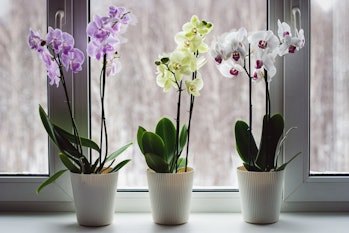
Multiple sites claim that ice cubes can be used to give orchids “just the right” amount of water. In fact, tropical plants do not like cold temperatures. Leaving ice near orchid roots can damage the orchids.
Almost all houseplants, including orchids, prefer lukewarm or room temperature water, about 70 degrees Fahrenheit (21 degrees Celsius). Use fact sheets from educational institutions or reputable organizations to determine the right amount of water and watering schedule for the type of plant you’re growing, and set reminders on your phone.
Use a potting medium that drains well and drains quickly. For orchids, a mixture of bark chips and sphagnum moss is much better than 100% soil or coconut.
“No Mow May”
Recently, many campaigns have sprung up promoting “No Mow May.” The idea is to delay regular mowing in May to provide more feeding grounds for pollinators trying to stock up on calories after winter hibernation.
Unfortunately, this practice usually does not benefit pollinators and can harm the health of your lawn.
Cutting more than 30% of the blades of grass at once is never a good idea. Grasses rely on their leaves to carry out photosynthesis and meet their energy needs. If more than 30% is lost at once, the plant may not have enough leaf surface area left to photosynthesise properly.
Overgrown grass has an overgrown root system and requires more energy. Not providing for it can lead to disease susceptibility, poor water management, and collapse. Such damage is almost inevitable after a month-long “no-pow” period.
Few lawns actually contain enough flowers to be beneficial to pollinators anyway. But that uniformity is useless to bees and other pollinators who need the pollen and nectar that other plants can provide.
While it’s great to prioritize pollinator health, the “no mowing” trend is best implemented in prairie, field, and wetland environments where plant diversity and flowering plants abound.
If you want to support pollinator health in your own garden, plant native wildflowers that pollinators actually want to visit. Less is more. Replace the entire lawn or small strips. Any number of lawn changes can help you save water and money.
Be careful not to mow wildflowers until they have finished flowering. Wildflower patches usually only need to be cut once or twice a year. Mowing grass after the last frost in early spring scatters the previous year’s seeds and creates a home for insects to overwinter.
Using Hydrogen Peroxide to “Cure” Plant Diseases
Hydrogen peroxide can disinfect surfaces and reduce bacteria and some fungi. However, the rapid reaction that gives hydrogen peroxide its bactericidal properties occurs immediately upon contact with other compounds. , hydrogen peroxide cannot travel throughout the plant.
As such, most pathogens (disease-causing organisms) are unaffected when they are inside the tissue rather than outside the plant. Excessive or improper application of hydrogen peroxide can dry out surfaces, kill beneficial microorganisms, and even exacerbate plant health problems.
Like pruning shears and propagation tools, there is certainly a time and place in plant care to disinfect surfaces, but a plant’s best defense against disease is proper care.
Water your plants only when needed and give them proper light and nutrition. Find out what your plants like best from educational institutions and other trusted sources. Regular pruning to increase airflow, proper plant spacing, avoidance of single-crop plantings, and crop rotation are just a few of the chemical-free techniques to reduce plant stress and reduce disease susceptibility. This is an example.
Diagnosis of disease using phone app
There are many apps that use user-submitted photos to identify plant diseases and provide solutions.
The truth is that in order to diagnose most plant diseases, scientists need to culture plant tissue to correctly identify the pathogen. Only with an accurate diagnosis can management solutions be recommended. Identifying diseases is something I do every day, so I have a pretty strong opinion here.
For example, exposure to herbicides, viruses, insect prey, and fungal infections can all cause leaf curling and deformation. The history of the factory itself, the location, the history of the site, the period, and other factors should be considered.
Don’t rely on apps to guess what disease your plants have. Also, do not act on bogus recommendations. Instead, contact your nearest university diagnostic lab or extension office for assistance.
Not sure where to go? Start in the lab directory of the National Plant Diagnostic Network. Many people, including myself, offer free consultations and recommendations. Most are reasonably priced if you end up submitting the sample to a diagnostic lab (my lab charges him $20 USD). It’s worth it, especially considering the cost of replacing the plant with something that could end up causing the same problem.
This article was originally published in The Conversation by Nick Goltz of the University of Connecticut.read Original article here.
[ad_2]
Source link