New Mexico Department of Higher Education Honors Rio Arriba County and UNM-Taos Partnership to Train 48 Students in Responding to Overdose, Opioid Use Disorder

[ad_1]

NMHED News:
- Program trains 48 students to respond to overdose, opioid use disorder
TAOS – The University of New Mexico at Taos and Rio Arriba County received $190,000 to train 48 new EMT first responders to treat drug overdoses and opioid use disorders in rural northern New Mexico. to effectively address other scenarios where
Competitive Rural EMS Training Grants were awarded by the Substance Abuse and Mental Health Services Administration (SAMHSA) of the U.S. Department of Health and Human Services to counties disproportionately affected by opioid use disorders to assist the Rio Arriba Emergency The aim is to increase the number of first responders in county. The Department of Higher Education sees this program as a strong example of how public-private partnerships can be leveraged between colleges, universities and public service providers.
“We are involved in this innovative program that has brought additional resources to northern New Mexico to support a critical workforce and meet the medical needs of rural communities such as Espanola, Dixon, and Taos, New Mexico. We applaud the University of Taos, Rio Arriba County, and all our community partners for programs such as these that will always have compassionate and qualified responders available to assist New Mexicans in need of care. It will help us do just that,” said Gov. Michelle Lujan Grisham.
“As a community college, the University of New Mexico, Taos is focused on the workforce needs of north-central New Mexico, with a focus on connecting local residents with in-demand career preparation to create essential We are committed to providing quality workforce training,” said Dr Mary Gutierrez, Prime Minister of UNM-Taos. “New Mexico needs trained first responders and health care professionals to ensure New Mexicans have equitable access to quality community and health care resources.”
Gilbert “Gilly” Valdez, a Dixon resident, completed EMT First Responder and EMT Basic Training at UNM-Taos earlier this year and is currently pursuing a bachelor’s degree from the Academy of Emergency Medical Services at the University of New Mexico Main Campus. I’m here. After earning his paramedic license, Valdez is considering getting a medical degree and becoming an emergency room doctor.
“I didn’t originally want to be an EMT, but I fell in love with this course,” says Valdez. “When people call us, they’re having their worst day, so our job is important as the first people they meet. , it makes the whole community safer.”
In addition to standard emergency response training, students will develop skills for responding to situations involving opioid use disorders and overdoses. With 30 to 40 of her residents dying each year from drug-related causes, Rio Arriba County has one of the highest numbers of opioid-related deaths in the nation. This program combines emergency medical training with behavioral health and harm reduction strategies taught by qualified professionals.
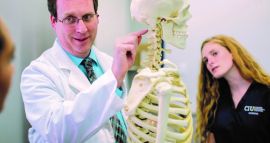
“We want all New Mexicans living in rural north-central New Mexico to have access to timely and competent emergency medical services in their communities. We strive to provide a pathway for young people in the region to pursue careers in public safety and health care,” said UNM-Taos EMS Instructor and District Superintendent of the Dixon Volunteer Fire Department, Dr. Steven Jennison. says. Jennison is leading the project in collaboration with Rio Arriba County, The Mountain Center, and Serna Solutions LLC.
“One of the very important implications of this is to establish a pipeline to health care for Rio Arriba students, to respond to overdose or behavioral health crises and to provide the resources needed to mitigate the situation. It’s about training the skills of paramedics,” said Rio Arriba’s Services Lauren Reichelt. County Director of Health and Humans.
Three 12-week courses are offered at various volunteer fire stations throughout the county for current volunteer firefighters and interested participants ages 16 and older. Courses are offered in the fall, spring and summer, with the first course starting on his September 20th. Upon completion of the program, you will meet the requirements to take the national registration exam and be licensed by the State of New Mexico to practice as an emergency medical professional.
The program will not only improve the welfare of the community, but will also support an increase in the number of health care workers who currently make up a quarter of Rio Arriba County’s wages.
If you are interested in registering for the Rural EMS training course, please contact Dr. Steven Jenison. dixonnmvfd@gmail.com or 505.692.4673. Information will also be posted on his website for the UNM-Taos EMS program. here.
About NMHED:
The New Mexico Department of Higher Education was established in 2005 and oversees the state’s public and tribal colleges, universities, and special schools. It also oversees adult education and literacy programs statewide, manages state-funded financial assistance programs and capital projects for institutions of higher learning, provides college preparation services through the GEAR UP program, and serves the State of New Mexico. It grants state accreditation to the private universities operating within it. For more information, see: hed.nm.gov.
[ad_2]
Source link