Science Talk – “For Abby, cancer was her normal life” – Mike’s Childhood Cancer Story
[ad_1]
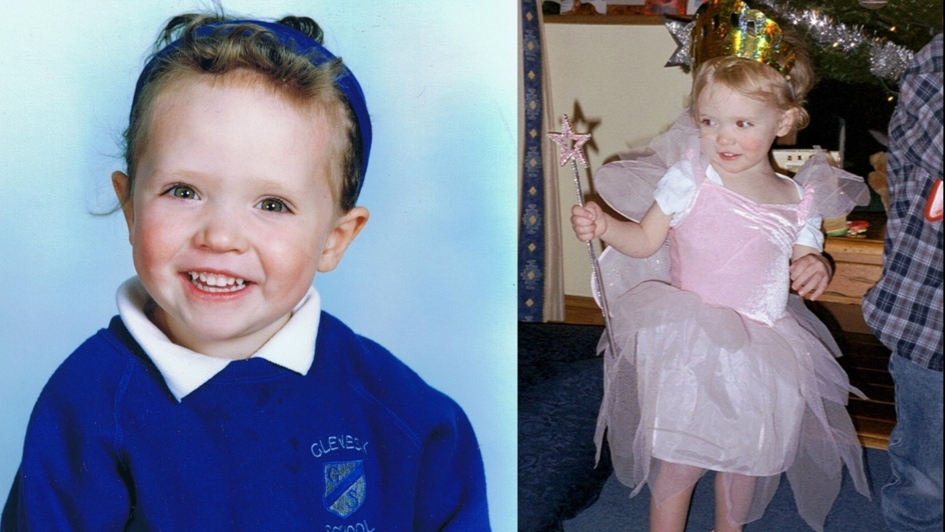
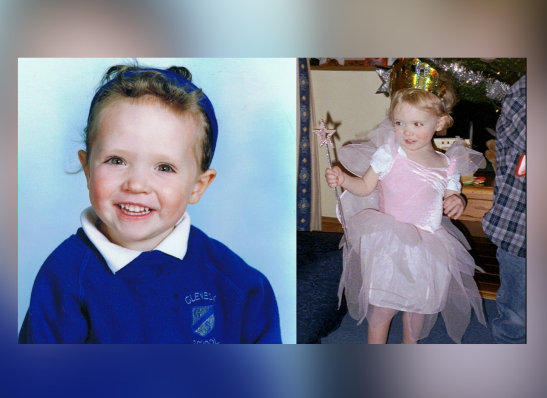
Image: Abby in school uniform (left) and Abby dressed as a fairy (right)Credit: Mike Shaw/Abbie’s Fund.
I remember when Abby was given a toy veterinary center for Christmas. It became her particular favorite and she had a lot of fun playing with it. I loved taking x-rays. It sadly reflected her real life, but Abby didn’t see it that way.
Every parent would say their child was special and unique, but Abby was truly amazing at making the most of life. , made everyone happy to be around her.
When Abby first started getting sick, it didn’t matter. We gave her a dose of Calpol – I remember carrying a bottle everywhere – and she was right back to normal.
But when we took her to a local clinic, they noticed she had lost a little weight. Eventually, within seconds, the pediatrician discovered that Abby had a large lump (tumor) on her stomach.
Abby was soon placed in Royal Marsden custody and subjected to various scans and tests. The tumor sounded like Wilms tumor, a rare kidney cancer that primarily affects young children.
This was in December 2002, when Abby was just 19 months old. Later that month, Abby was sent to St. George’s Hospital for her biopsy. During her procedure, they discovered she was bleeding into a tumor, so they removed it on the spot, along with her left kidney and adrenal gland, leaving her in intensive care for several days. After spending time, Abby was released. On Christmas Eve, she received her first dose of chemotherapy.
“I knew nothing about neuroblastoma‘
The biopsy results came back within a few weeks. It was worse than I expected. Abby did not have Wilms tumor. She had adrenal neuroblastoma.
My wife, Liz, and I knew nothing about neuroblastoma. I don’t think most people have heard of it. At the time, we certainly weren’t.
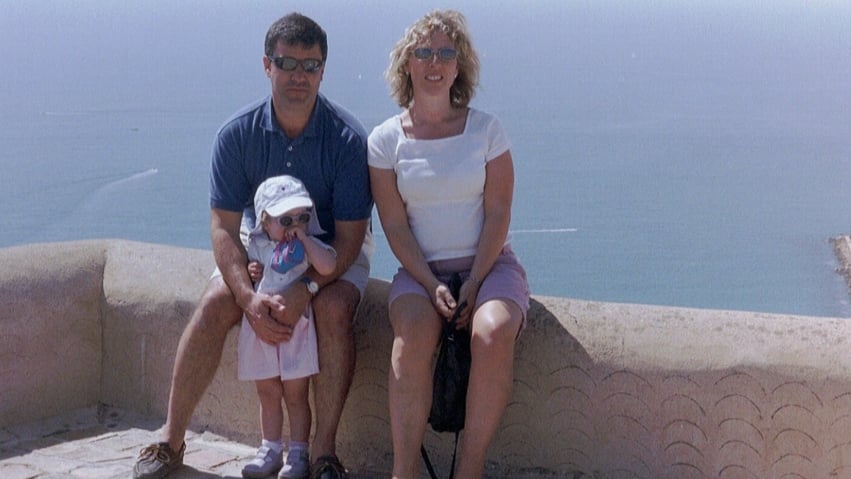
Image: Mike, Liz and Abby on vacation. Credit: Mike Shaw/Abbie’s Fund.
We didn’t know what this mysterious disease my daughter had and spent hours researching it.
As soon as you are diagnosed with cancer, you start thinking about death and you can’t help but pay attention to the results and statistics. And while most of the time we come across bad stories over the years, good stories don’t. Because those kids will get better and there won’t be much else to talk about.
So the more I looked into it, the more bad news I found. Eventually we stopped watching.
But we were hopeful. The tumor had already been removed. And Abby had been diagnosed with stage 1 cancer, which in a strange way we were delighted because stage 1 is the “best” you can get.
The next few months were great. Abby started her nursery school, threw her birthday party and hung out with her friends. For a 2-year-old, it was a simple, fun, and normal life. And it was so nice that way. Abby was under constant surveillance, so she created a team to watch over her.
Then, in June 2003, I noticed that Abby’s blood pressure was rising. She underwent various tests, which seemed to indicate that her cancer had returned. So she was scheduled to have her MIBG scan, a special scan that can detect the presence of neuroblastoma. This involved Abby lying still under her plate in a large scanner for nearly an hour. But she was an absolute star, and thanks to the help of Postman Pat, she made it.
A scan showed the cancer had spread. It was in her bones and marrow. Her cancer was now stage 4.
There were still positives to hang on to. Our consultants handled a much worse case than Abby’s, but the kids were fine. ). Our consultant also told us that there have been significant advances in the treatment of high-risk neuroblastoma.
It was the worst news imaginable, but there was hope.
Abby was amazing
Once diagnosed with stage 4, proceed with standard treatment protocols. Over the next 12 months, Abby underwent chemotherapy, surgery, more chemotherapy (this time in higher doses), a stem cell transplant, and radiation. Throw in a variety of other treatments into the mix, including antibiotics for low white blood cell counts, injections to help blood clot, and medications for low potassium levels.
Her potassium level meds were really bad. Why don’t kids’ meds taste like chocolate?
We ended up trying to disguise it with her food. She had not been able to detect them yet.
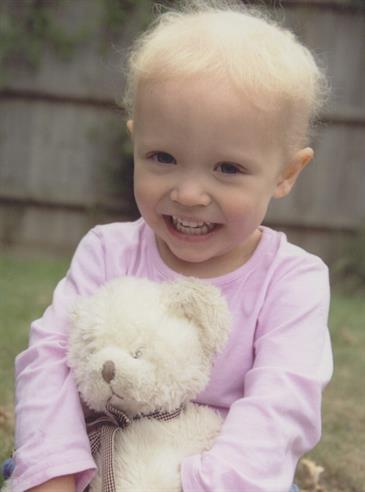
Image: Abby Shaw with a teddy bear. Credit: Mike Shaw/Abbie’s Fund.
It’s been a turbulent year, but Abby has been great. Oddly enough, she loved Royal Her Marsden. I didn’t understand why. There’s nothing against the location, but if you say, “Abby, we’re having a sleepover in Marsden,” she’ll say, “Yeah.”
Kids that age don’t really understand what’s going on. Abby understood that she had a lump in her stomach that shouldn’t have been there, and that the treatment she was receiving was to remove the lump, but nothing more. It got better, so it was sometimes very difficult to explain. She didn’t think anything was wrong, but she was in the hospital regularly.
But she was great about it. She never complained. She never wavered. She took it as her normal life.
Sadly, I think that was the case for Abby.
As a parent, it is a very strange thing to experience. Even if you hear or read about childhood cancer, you can’t imagine it happening to you. We didn’t really have time to analyze what was going on when it happened. And Abby handled it so well that we were able to deal with it too.
Abby’s older brother, Jamie, was two years older than her. He kind of got what was going on, but he was still too young to really know what was going on.He was great. He and Abby played very well together. Whether Abby was lying in a hospital bed, running around the house, with plasters on her legs and a tube in her nose, she was still a real rowdy and fall expert. A ruffian who loves to annoy her brother.
our daughter
After that intense treatment, life returned to its normal elements and it was wonderful.Abby’s hair began to grow back and her strength and appetite returned. She celebrated her birthday with her friends by throwing a party. She started swimming, dancing and gymnastics. She began learning to read and taught herself to write her own name.
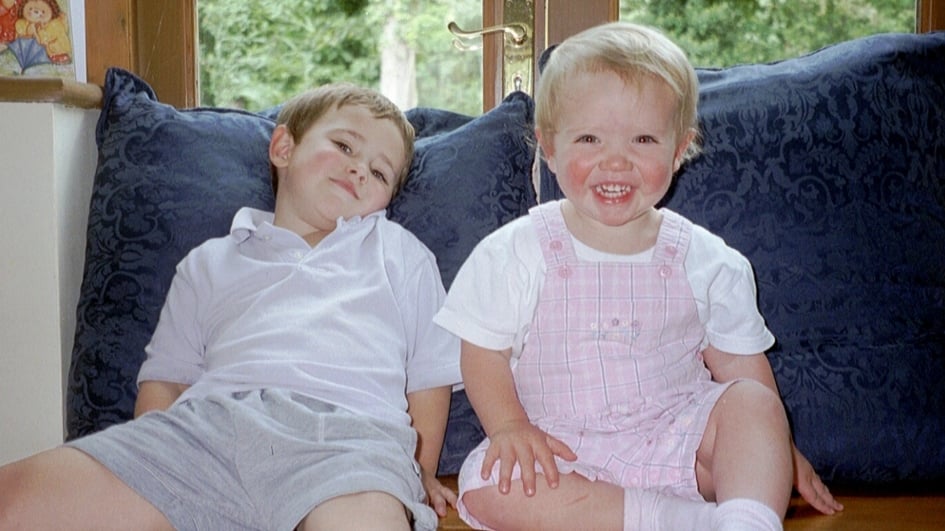
Image: Jamie and Abbie sitting on the couch. Credit: Mike Shaw/Abbie’s Fund.
Toward Christmas that year, Abby was chosen as the cow in the school’s nativity play. She was disappointed that she could not become a donkey.
Abby never had cancer. She was just Abby. she is our daughter our 3 year old.
Then in March 2005, when Abby was four years old, she started limping. She was at a party in the soft play area, so apparently the answer was that she jumped badly and got hurt.
We took her in for scans and tests and during the process we discovered that the cancer had returned. Abby relapsed.
It’s one thing to hear that your child has cancer. It’s just terrifying to hear that they’ve relapsed.
I don’t think I was told this, but I knew that the relapse was almost terminal.
So Abby was hospitalized again. She told her her tummy lump was back. Luckily, she hadn’t had treatment long enough, so she had options available: She had more chemotherapy, then radiation.
After these the disease disappeared completely. The scan was amazing, I didn’t see anything.
But with one or two lurking cells, the cancer will evolve and recur. And, sadly, that’s what happened. And it’s back.
We’ve come to the point of starting the end-of-life conversation. Everything was to keep Abby comfortable and happy.
And most of the time she was happy. We made a lot of great memories during that time.
Through the Make-A-Wish Foundation, Abby became a princess for a day. She was taken to the Disney store in Guildford in a pink stretch limousine, where she and Jamie were given free rein and could choose whatever they wanted. where she was treated like royalty and the butler offered her a princess menu.
We went to Hastings and the New Forest on holidays, Abby attended school concerts, won races in high-speed buggies at sports day, and danced at discos. There are many things I want to look back on and cherish.
We always talk about Abby at home. Her two other siblings, who weren’t born when we lost Abby, know everything about her. They know her quirks and her funny side. They know the same girl Liz, Jamie, and me.
Abby will munch little by little
Abby lives on in our memories, but also through her foundation.
The charity Abbie’s Fund was founded after Abbie’s relapse in 2005, when a group of community mothers organized a fantastic event to raise money for neuroblastoma research. And Abby is gone, but charity lives on.
Each September, the anniversary of her death, we are given the opportunity to reminisce about what it was like to travel with Abby and realize how everything went beyond our wildest dreams.
We have raised over £700,000 to date. Most of this has been used to support the excellent work of his Professor Louis Chesler and his team at ICR and we are very pleased with all they have achieved.
With our support, they were able to make great strides in developing blood tests for childhood cancer. This technology enables clinicians to understand the genetic variation (individual variation) of each childhood cancer and select the most effective treatment options.
It can also help discover when a child has a relapse before symptoms begin to appear.
The progress being achieved is incredible. Abbie’s Fund’s tagline is ‘Helping me survive my childhood cancer’, and in just a few short years it has gone from a glimmer of hope to realizing it’s actually possible.
Abby would be happy to know there’s a charity named after her, but hopes she can lead to a cure for this dreaded cancer.
We are the world leader in pediatric, teenage and young adult cancer research. Our international research efforts are key to changing the way childhood cancer is treated.
Learn more about our Family Charity Partners. That support and dedication drives our efforts forward.
view the details
Provide comments
[ad_2]
Source link