North Korean education: the long game
[ad_1]
Despite these challenges, Singapore-based non-profit Choson Exchange has quietly and steadily moved forward with our mission. Our organization believes that encouraging the next generation of entrepreneurs in North Korea can be a viable path to positive change and a healthy civil society. approach and consistency, and their appetite for educational programs in different areas remains strong. From the outside, the situation in North Korea can sometimes seem comical, even hopeless. But in our experience, at least for the North Koreans with whom we interact, the desire to build a better economic future for themselves and their families never wavers.
This analysis describes our work background, field experience, and observed effects of the program. It then recommends ways policymakers can help foster understanding and peaceful future interactions with North Korea while continuing to drive positive change in North Korea.
Teach entrepreneurship to drive positive change
Since its launch in 2010, the North Korean exchange program has reached more than 2,000 North Koreans through lectures, workshops and seminars. We rely on volunteer international instructors to teach a wide range of topics including hospitality management, customer segmentation and pitch tips for small business seed funding. It combines inspiring stories from entrepreneurs with academic lectures that guide students on how to access local capital and grow small businesses within the constraints of the North Korean environment. Our program also extends to promoting and facilitating business networks between North Korean participants and institutions. Overall, our topics generally focus on the core belief that entrepreneurship can bring about positive and lasting change in North Korea.
While the Choson Exchange initially focused on domestic training, it has evolved to offer opportunities for North Koreans to travel abroad, including business workshops, conferences, and even MBA courses at foreign institutions. did. A notable success was bringing North Korean partners to his 2019 St. He Gallen Symposium, where they conducted an economic dialogue with fellow students. In 2015 and 2016, we helped place and support North Korean students studying for their postgraduate degrees at Nanyang Technological University in Singapore. Our program has also aimed to research and promote the development of key opportunities for the North Korean economy, including recent research on potential tourism growth in Gangwon Province, North Korea. Initially, we intended to develop this in-country work into opportunities for North Korean students to visit tourist destinations abroad, but due to the pandemic, we had to move to online classes.
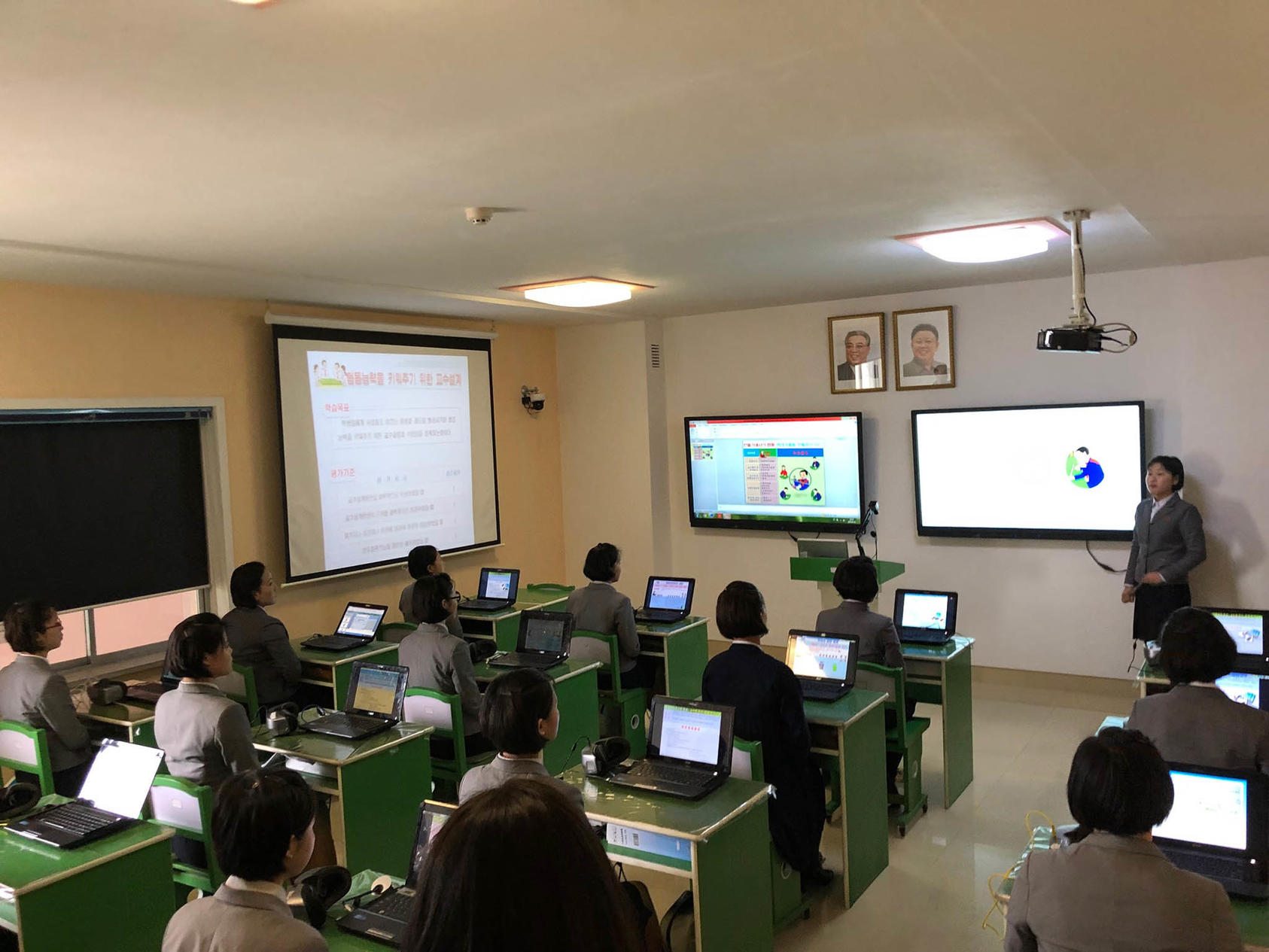
Since 2020, we have live-streamed courses to auditoriums in North Korea, but due to increasing logistical difficulties, the number of internationally engaged organizations with this capability is declining. A growing number of referrals to entrepreneurs continues to focus on those interested in entrepreneurship and economic development, but the program is open to everyone from start-ups to established companies to policy makers. It shows that it is well received by various sectors of North Korean society interested in opportunities.
The Choson Exchange’s launch and continuation in Singapore (and later Vietnam) will help promote a perspective on North Korea that deviates from traditional think tanks and policy views, and encourages engagement without overtones of a Washington-centric agenda. made it possible. This aspect is highly appreciated by our partners inside and outside North Korea. Our relationships with our partners have endured and have been largely unaffected by changes in U.S. administration and policy. You are given a unique window into opportunity.
Effect of engagement
Economic development is clearly a priority for the North Korean government, and our experience working with individual North Korean entrepreneurs confirms this. They recognize that economic development at the individual level improves quality of life and have a particular interest in such contributions.
We have witnessed an increasing sophistication of interest in international economic ideas and a growing willingness to consider and embrace them. For example, concepts such as Intellectual Property (IP) law introduced in previous seminars will appear as relevant questions in later sessions. Intellectual property protection was a novel concept when it was discussed in the early stages of the course, but in the end, in response to questions about how competition and intellectual property protection work in North Korea, The desire to adapt foreign concepts to the local environment is at an all-time high. True to ideology, the North Korean leadership takes a long-term view of all things economic and is interested in ideas that help the sector grow organically and, perhaps more surprisingly, sustainably. I have. On the other hand, future North Korean entrepreneurs eagerly seize opportunities in spaces in which they can operate.
The ongoing online lectures focus on using practical examples to convey the benefits of companies, especially in areas such as the service industry, hospitality, tourism and the green sector. , is more colorful and descriptive than barren theory. Real-world examples include how informal bed and breakfasts set up shop as small businesses, and what local amenities tourists bring to a domestic seaside vacation in a diverse and competitive market. and so on. We also invite waste management entrepreneurs to discuss green economy opportunities at both the individual and state levels. Green growth may never become a pillar of North Korea’s self-reliance philosophy, but North Koreans have successfully adapted to the role of individual entrepreneurs in developing products through sustainable processes. We also take care to provide an example that is culturally resonating and suited to the maturity of the North Korean economy, but North Koreans are more open to new international business concepts in the sharing economy like AirBnB. It is also important to understand that you should not hesitate to learn about A framework that is the foundation of real estate for rent laws, etc. Many of the participants used the knowledge gained in the lectures to take advantage of structural economic changes in North Korea that have become more common since we began teaching, such as using private capital for construction. .
Interactions between North Koreans and international business leaders also have intangible value. Many of our seminar leaders are successful business people, and weaving their personal anecdotes into our workshops is important in inspiring attendees’ first journey into the enterprise. For example, a China-based coffee entrepreneur from the Women in Business program talked about how she launched her coffee shop from the ground up to capitalize on the burgeoning lifestyle her sector. Participants in that workshop did just that in Pyongyang.
policy proposal
The slow but influential progress made by North Korean educational institutions is an important and underused aspect of Track II diplomacy. The U.S. administration often focuses on short-term security outcomes on the peninsula, but importantly, this approach sometimes misses the forest for the trees.North Korea The long-term impact of empowering the next generation of entrepreneurs can lead to broader societal improvements that strengthen mutual relationships and security.
Although North Korea appears to prioritize security over economic development, economic development remains an important long-term concern that could facilitate bilateral engagement and benefit both sides. North Korea is increasingly turning to economic blueprints from countries such as Vietnam and Singapore. Given China’s growing economic power, a broader and more forward-looking approach to addressing its desire for economic development will be needed if the United States seeks a meaningful engagement with North Korea. Moreover, China’s rapid economic development and North Korea’s economic dependence on Beijing mean that the United States and its allies are shrinking their economic clout beyond sanctions.
Education remains a promising vehicle for long-term transformation of relationships. Many people may think that educational exchanges should only take place after diplomatic relations are normalized, but it is not necessarily premature to provide North Korea with educational opportunities. If education is done properly (such as avoiding teaching technology for nefarious purposes), education need not conflict with existing sanctions regimes against North Korea. Education provides a clear path to a dependent future relationship that provides an important economic lever for both sides. We need not see success stories of foreign education transforming a country’s external economic relations without undermining a reticent political system.
The policy implications associated with education are a bit more complicated than simply recognizing its own potential. Education must focus on the introduction of sustainable economic ideas about entrepreneurship and have a long-term view towards long-term goals. There are many ways to introduce these ideas, but the US approach needs to change.
At a fundamental level, Washington will review the effectiveness of its isolating and punitive approach to North Korea and seek a more open and inclusive approach to engagement with North Korea that emphasizes long-term benefits as well as short-term threats. approach should be considered. A useful first step would be to review and expressly support our mutual aspirations for a “new US-North Korea” relationship as outlined in the 2018 Singapore Statement. This underscores the importance of expanding people-to-people exchanges, which are essential for educational success. on a large scale. Similarly, lifting the ban on U.S. citizens visiting North Korea would help remove a significant psychological barrier to any willingness to engage with North Korea on all fronts.Travel bans and related North Korean sanctions Concerns about violations are having a disheartening effect on educators, organizers and institutions who want to contribute to positive change in North Korea. While Choson Exchange had no problem complying with U.S. law, it noted that U.S. Treasury Department restrictions prevented or may have prevented other outside entities from conducting education in North Korea. is aware of
Especially when it comes to education, supporting North Korean students in the form of scholarships and placements in overseas educational institutions is a short-term expense, and long-term relationships can be built through educational diplomacy. For example, Washington could consider sponsoring scholarships for North Koreans to study at Vietnam’s Fulbright University (a major liberal arts institution). This either formally recognizes the role of education in improving relations or uses established government mechanisms such as the State Department’s International Visitors. A leadership program that allows North Koreans to make educational visits to the United States.
A more open US approach to the role of education in North Korea relations should focus on promoting a healthy civil society based on practical applications suited to North Korea’s constraints. Conveniently, this is also what North Korean students want most and is most beneficial to them in the long run as well. In the administration’s grand strategy focused on denuclearization and security threats, supporting and encouraging entrepreneurial activity in the form of simple small businesses like bed and breakfasts and downtown cafes is trivial. As silly as it may seem, this approach could prove beneficial in the long run.
Ian Bennett is Associate Head of Business and Entrepreneurship Programs at Choson Exchange. Jamin Jamison Program Manager for Online Education at Choson Exchange.
[ad_2]
Source link