Award-winning teacher speaks out against attacks on ‘honest education’

[ad_1]
Across the country, dozens of controversial policy debates have erupted over how teachers talk about race, sexual orientation, and gender identity in the classroom. They say they feel left out of the conversation.
A new fellowship program run by the National Teacher of the Year Network and the Education Civil Rights Alliance (a joint effort of nonprofits, teachers unions, and civil rights organizations) aims to amplify teachers’ voices on how to keep their classrooms up and running. increase. As a place for student-centered candid dialogue
Voices for Honest Education Fellowships are paid and open to award-winning educators recognized nationally and internationally. Educator She spends a year engaging with state legislators, training educators on upcoming legislation, and speaking out on the importance of “honest and positive education.”
The first five Fellows, former state teachers from Texas, Georgia, Colorado, Louisiana, and Massachusetts, released a report this month outlining research that: Academic performance can be improved by verifying student identities in the classroom.culturally sensitive education It has also been found to increase student motivation, interest in content, and perception as a competent student.
Education Week recognizes Tracy Nance, Georgia Teacher of the Year 2020 and 2021, Gerald Munoz, Colorado Teacher of the Year 2021, and Takeru “TK”, Massachusetts Teacher of the Year 2020.・We interviewed three fellows of Nagayoshi. Educational status and fellowship goals. These three of her educators are not yet in the classroom. Munoz is currently the Learning and Development Manager for Denver Public Schools, and Nagayoshi is the Professional Learning Director for his events community at Panorama Education.
This interview has been edited for length and clarity.
Your report focuses on student affirmation and the importance of honest education. What would that look like? Why is it so important?
Nonce: We spoke to educators across the country, award-winning teachers like us who work in classrooms. They are the ones teaching from our state standards. When we talk about student-affirming education, we are still starting from those state standards, but we want our children to be welcome. Invite children and all of their identities into the classroom, where their voices are respected and where they are free to ask questions and receive honest answers.
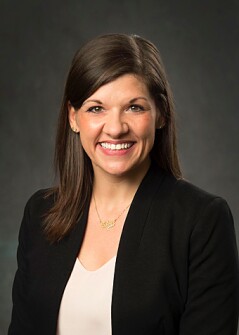
The classroom is also culturally responsive, not just providing students with multicultural materials. It also means making sure that the classroom curriculum is representative of the students sitting in the classroom. The truth is our country is more diverse than ever. Our students deserve to be seen and their history told.
Munoz: I grew up in a school with a divisive curriculum. There was a wall between me and the curriculum. Could not connect to curriculum. I was sent the message that Mexican Americans like me were not making any meaningful contribution to the growth and development of the United States. It didn’t even matter. I should have had the opportunity to understand my community, my neighborhood, my family, my father’s country of origin in a historical context.
To me, these student-affirming practices dissolve the walls that separate children from each other and societies from each other.
How will race and sexuality be discussed in the classroom, or how laws about LGBTQ student rights in schools will affect this work?
Nonce: As an educator and parent in Georgia, where this law is already in effect, I find it terrifying. I fear our state will next enact a “don’t call me gay” law. It’s very harmful to our children.
I’m thinking specifically about a little girl named Sarah who had four mothers and lived with all four because her original family divorced and remarried. What does it say when we say to our children, “I can’t talk about the house”? It tells them, “Don’t be gay.” … we need to give them the right message that they are as valuable as their classmates and that they are loved in every way.
Munoz: Looking at the work I’ve done over the last 20 years with amazing academics, amazing families and communities, and of course students, I really feel that victory is at hand when it comes to representing everyone in the classroom. It was getting to the point…and now what we’re seeing is a really upsetting pushback.
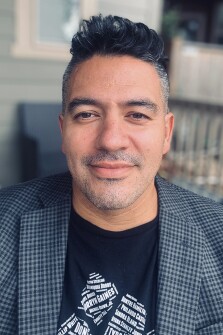
A part of me sees it and says: But I think the difference now is in the way those who oppose honest education are trying to codify their intolerance, bigotry and harmful behavior into law. These voices do not represent everyone. It’s a tiny fraction of our population that occupies a lot of space and makes a lot of noise about these things.
And when you look state by state, the laws are very unclear. We apologize for the inconvenience. So when the teacher is actually saying, “OK, what am I allowed to teach and I’m not allowed to teach?” Many of these laws are inconsistent, even in the same region, and send different messages. So the majority of teachers who need these jobs to survive will say, “I’m not going to touch this because it’s confusing.”
What do you think this means for teacher longevity in the classroom, especially for teachers from marginalized backgrounds?
Munoz: When many of us think about the code switch required when we’ve already stepped into these professional settings, it can be very dangerous once we find ourselves targeted by these villains. It’s horrible for the need to put the power of teaching in front of students who come from, relate to those communities, look like those communities, and have experiences that really help ensure that all children I think it means they have a chance to be successful and have a chance to build the life they want to build.
I thought it was like, ‘Wow. So you’re going to erase my history? [teaching]. Why I? If you’re trying to erase who I am, you clearly don’t appreciate me. ”
During your fellowship, you will spend the next year emphasizing the importance of honest and positive education. what would that look like?
Nonce: I write weekly on my medium-sized blogwe offer our thoughts in a news article [about] Based on our own experiences in the classroom, let people know our hearts and what we teach in our schools.
We know parents support their local schools. What they don’t know is all of this otherness. Ignorance breeds fear. We want to make clear all the efforts that educators are doing. We are not here to indoctrinate anyone, we are here to teach our children to have strong self-characteristics and to look to honest history to solve today’s problems. .
Munoz: Looking at some of the misinformation out there that informs much of the legislation and policy decisions, I think there are a lot of misinformed assumptions. Do parents deserve to speak up? absolutely. Do children deserve to speak up? absolutely. Do teachers deserve to be treated as professionals like us? Yes. These are not mutually exclusive goals. These are goals that must be achieved together or else it will not work.
As I envision for the coming year, it will be great to learn from the wonderful state teachers this year. …we need to make sure people feel safe and protected in their speech and their association. I want to know what honest education from community to community looks like is.
Nonce: In addition, I meet with representatives and policy makers and write editorials for national and local newspapers. We are looking at the whole country because this effect is everywhere.
It often starts with well-funded parental rights groups. As such, we plan to provide training to school board members and provide training to parents and educators. I am just trying to educate. It turns out that even some award-winning teachers don’t know what’s going on in their state.
How would you summarize the message you want to share next year?
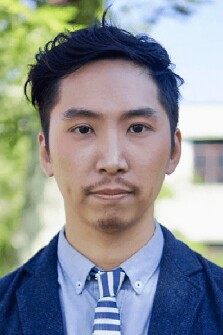
Nagayoshi: I think it’s essentially about getting educators to take back the narrative of what’s going on in schools. It prevented people from participating in the classroom and ultimately affected the students who were there.
as people in the classroom [and] Having taught on the front lines, know that what is set there is not true. Hmm.
Nor are there any best practices to counter that message or a way to articulate what an honest and inclusive education looks like. , is the space that pushes against this narrative we are seeing.
[ad_2]
Source link