How New Orleans Food Culture Shaped My View of School Lunches
[ad_1]
I teach in New Orleans, a city known for its food scene. Like everything you love about New Orleans, our cuisine only exists because of black people. From grilled okra, crawfish boils to Creole red sauce, New Orleans cuisine is a blend of recipes passed down from generation to generation of Blacks, Creoles and Native Americans to create one of the only styles hallmarks of American cuisines. When my class wrote a book last year about artifacts of New Orleans culture and what they mean to them, a third of the class wrote about food. In every class I’ve taught over the past 12 years, cooking comes up repeatedly when I ask about my students’ goals, skills, dreams, and little-known facts.
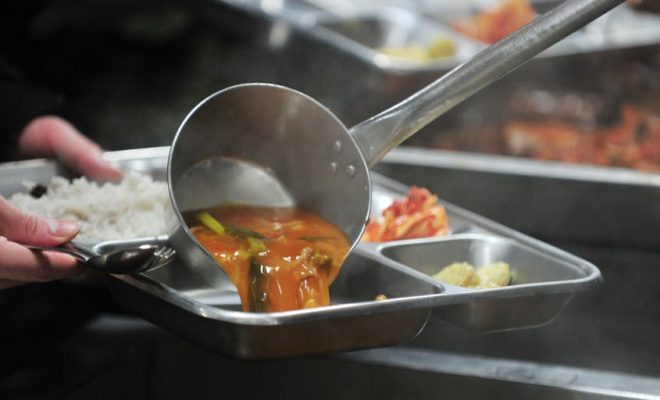
Despite the legacy of this culinary and cultural heritage, my students find themselves in a difficult position during the school day for breakfast and lunch. Between the grease, carcinogenic wrappers of nearby fast food options, and the tasteless, culturally irrelevant food options shipped to our cafeteria by a national corporation, our students don’t seem to have any good or healthy food options.
In my afternoon classes, the drop in energy after lunch is palpable and there is a noticeable difference in the number of students with low or no energy at 2:10 p.m. when our last class begins. Students I teach one semester in the morning are more engaged and productive than when I teach them in the afternoon. I know that students skipping lunch or eating foods high in carbohydrates and sugar contribute to this trend of lower classroom engagement.
This controversial relationship between New Orleans students and the school lunch hasn’t always been the case. Sitting around classic round tables with stools attached, I listen to my fellow teachers from New Orleans reminisce about how much they miss lunch from their high school days. Kidney beans and okra with rice and seafood stand out for the room temperature unseasoned sweet potato fries we’re looking at now.
Very few of the educators and students who spend their days in America’s public schools have affordable access and protected time to eat good, healthy food. New Orleans college students know a lot about good food, so why do so many choose fast food or skip school lunch altogether? To quote the California Federation of Teachers, “The working conditions of our teachers are the learning conditions of our students.” As adults facing similar options for our nutrition, how can we help our young people make the best decisions possible for their well-being and engagement?
A food desert on the outskirts of a food Mecca
On the block I drive to school each morning, I pass a KFC, Taco Bell, Wendy’s, and Mcdonald’s. Next to the school is Papa John’s, brightly lit and filled with promotions and specials alongside giant food pictures; this is New Orleans East. More than 80% of the people in my school district are black, and almost half of the households here have children under 18. When I stop in the school parking lot, the landscape changes. Fruits, vegetables and flowers grow in our school’s food forest. A mural created by students behind the forest reads, “Fresh Food is Liberation.” Arguably what one would consider a food desert, the juxtaposition is striking and the tension between these two overlapping contexts where my students live and make decisions is significant.
Our nutrition coordinator does her best to provide us with good, healthy lunches every day, but her skilled hands are tied by USDA regulations and the supplies our contracted food supplier sends out weekly. Revised a few years into my teaching career, the USDA guidelines emphasize decreasing fat intake and increasing whole grain consumption, though these principles are largely devoid of strong, counter-recipe evidence for much of the food New Orleans residents know and love. These mandates align more closely with farm lobbying priorities than with medical advice. Because these restrictions are so specific and tied to valuable federal funds, most charter schools in New Orleans outsource dietary decisions to national companies like the one my school uses. These companies claim to provide healthy, “culturally relevant” food, but what ends up on our students’ plates seems far from those descriptions.
Where the chicken, macaroni and cheese platters cooked by New Orleans elders once were, there are now dishes of seamless food delivered to our school and hundreds of others across the country. In March of this year, there were no New Orleans cuisine options on the monthly menu, replaced by menu options such as “Chicken Nuggets and Bun”, “Cheese Pizza” and “Hotdog”. All children deserve meals that nourish them and bring them joy – for children in New Orleans, it’s their birthright. Instead, they receive plastic containers filled with check boxes and USDA money orders. Are we willing to accept that across this incredibly wealthy country, our children are being offered meals that none of us would choose for ourselves?
More than a student problem
To be fair, I don’t judge my students’ lunch decisions. Sometimes I stand in line behind them to pick up school lunch and other times I stand next to them waiting for my order of McNuggets. I grew up in central Pennsylvania. In the summer, when my siblings and I were young and my parents were trying to get a foothold financially, we would stop at a local public school for a free lunch most days. I have vivid memories of dry chicken nuggets, moist green beans, and two percent milk on polystyrene plates and red plastic trays. Sadly, not much has changed in the decade I spent eating school lunches as a student afterward. This pattern of taking what I could get became how I nurtured myself throughout college. I chose what I could afford in a fluorescent-lit food court, ate alone between classes and trips to the library, and gave little thought to nutrition.
When I became a teacher, my eating habits got even worse. I often skipped lunch entirely and ate the fastest thing I could find after work with my stomach growling and banging my head. Fellow teachers have occasionally commented on my greasy bag of crisps and my microwaved frozen food matrix. Yet, as a stressed out new teacher on a low salary, I didn’t have the money, time, or energy to do better. Genetics and metabolism combined in such a way that I was in a weight range doctors deemed “appropriate” according to debunked, fatphobic Body Mass Index. Still, I didn’t feel well. I developed a chronic illness and I knew I had to take better care of my body.
For years I’ve known that changing my diet might help, but much of the dietary research available is misleading and affordable options are scarce. Like my students, I found myself in a difficult position, often defaulting to what was easy and tasteful. I wasn’t quite sure what to do about this, but as with other difficult realities our students face, the best thing we can do to address the unequal access to healthy, high quality food, adapted to their culture, is to provide a space for them to learn and talk about it and let them make their own decisions.
Set the table with history and context
In my graduate level English course, we spent the semester reading, watching, and listening to various sources focusing on the human body and its relationship to society. In the last unit, we read and discussed an excerpt from Kiese Laymon’s modern classic memoir “Heavy”, in which he masterfully discusses his relationship with his weight and health and how both were affected by white supremacy. and her family’s ability to access certain foods. The conversations and reflections are rich and nuanced, leaving us surprised that our time is up when the course ends.
This year, much of the research I have done to improve my health and write this article has made its way into the curriculum alongside a variety of perspectives on trauma and stress, which contribute to rate of heart disease as important – and perhaps even more important – than diet and other heart risk factors.
I hope the combination of these readings, discussions, and other classroom activities will allow students to discuss their food and health in a space with adults who care about them, but I want more than that. By identifying the impact of capitalism, white supremacy and fatphobia on our diets, our class provides the larger context for my students to play a role in a discourse that goes beyond what is happening in a plate during a given school lunch break.
The children of New Orleans are the descendants of culinary geniuses and the future ancestors of future cooks and consumers. By constantly spending our class time examining and dreaming up ways to break out of these systems in ways that are relevant to our daily lives, my students feel encouraged to make sense of the world around them and decide how they want it. see change on their plates and in their worlds – now and for generations to come.
[ad_2]
Source link