Different Friendships Matter – Education Next
[ad_1]
The school and college lockdowns that accompanied the pandemic have centered the role of formal education in making friends and maintaining relationships in ways few could have imagined. Education-based friendships and other personal relationships (a form of social capital) help prepare young people to pursue opportunities and human prosperity. As young people return to schools and colleges for face-to-face learning, parents, educators, and policy makers need to reflect on the importance of these social connections.
Large new study by Harvard economist Raj Chetty and nearly 20 colleagues published in journal Nature It provides ample material for thinking about the importance of social relationships, including suggestions on how schools and colleges can foster them. We show that the number of economic ties, or friendships between low- and high-income earners, is a strong predictor of a community’s ability to support the upward movement of young people in the income distribution. This is especially important when young people return to the classroom.
The study looks at 21 billion Facebook friendships, based on data covering 84% of US adults between the ages of 25 and 44. The result is a detailed analysis of how friendships affect financial mobility and a website where you enter your zip code, high school, or college. It shows how common cross-class friendships are in those places. This analysis focuses on his three forms of social capital. Social cohesion: The degree to which communities and social networks are closely connected. Public Participation: How often an individual volunteers to participate in community activities.
economic ties

In this study, the number of economic ties, or cross-class friendships, was the strongest predictor of a community’s ability to facilitate upward mobility of incomes, and that the quality of schools, job availability, family composition, or community found to be stronger than other measures such as race. make up. For example, if a low-income child grows up in a county with similar economic ties to a typical child with high-income parents, future earnings will increase him by 20% on average. This is equivalent to going to college for about two years. It’s not necessarily the friendship itself that does this. They likely have what Chetty calls “downstream effects” that shape our aspirations and change our behavior.
Moreover, this relationship of economic connectivity and upward mobility is independent of the wealth or poverty of the place. Poorer children, for example, have better outcomes, even in poorer zip codes where poor people have wealthier friends. There is a large positive causal effect on our upward aspirations.”
How social bonds form depends on income and circumstances. For example, wealthy people tend to make more friends in college. Low-income people make more friends in their neighborhood. Middle-class individuals do so at work. Often these tendencies act to limit cross-class friendships.
Differences between the environments in which low-income individuals grow up in the number of cross-class friendships are attributed to an approximately 50/50 blend of the two factors.at first simply exposure To high-income earners that occur in a variety of settings and institutions that connect people, such as schools, workplaces, and religious groups. But simply being exposed is often not enough.Equally important is the extent to which circumstances and institutions reduce friendliness bias, or the tendency to form stronger relationships with people of similar backgrounds. engagement We also suggest that friendships with high-income individuals vary by environment and institution, and that interaction is either facilitated or inhibited by how the environment is structured and how institutions function. For example, intra-school academic tracking produces a higher friendship bias and limits friendships between classes, even in socioeconomically diverse schools.
In short: exposure + engagement = financial ties
Places of Friendship: Personal Detours
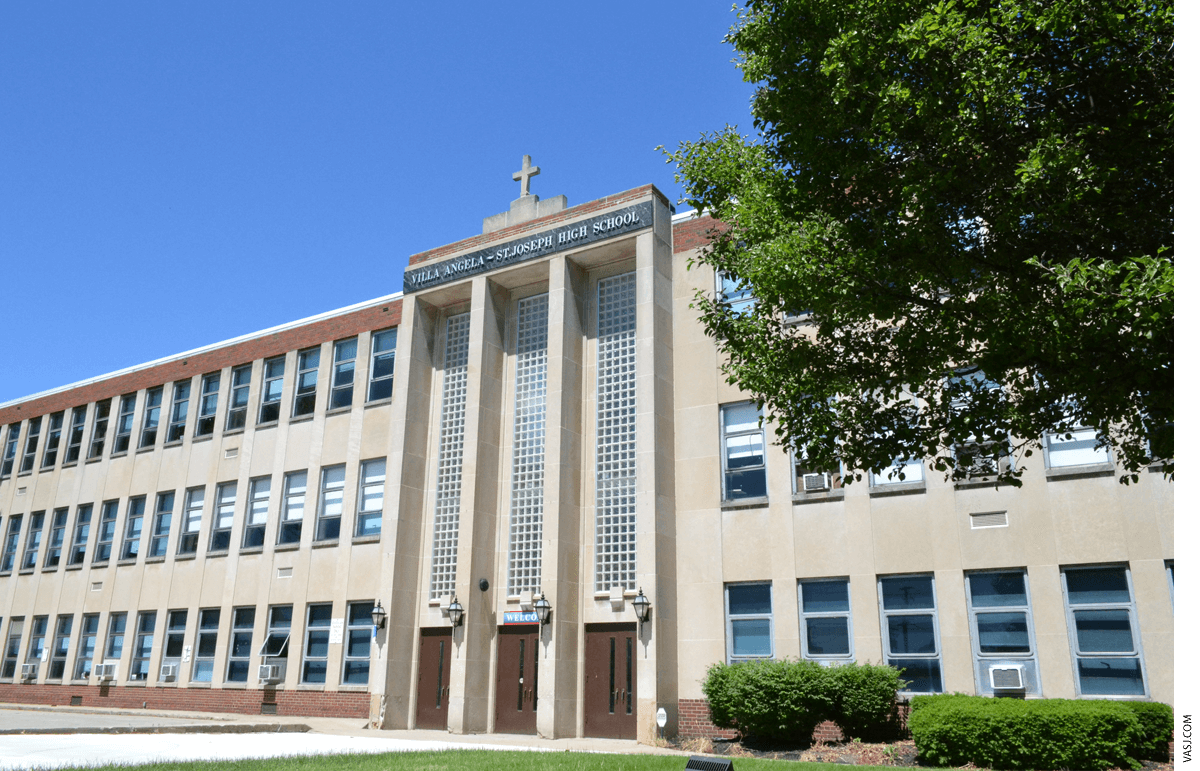
On a personal level, growing up in Cleveland, Ohio in the late 1950s and early 1960s, there are three places where cross-class friendships took root and developed. One was at her local YMCA, especially during her two-week away-from-home summer camp, where friendships began to develop around the age of ten. At that time, it was rare for someone like me, who attends a Catholic elementary school, to participate in the activities of Y’s rather than the activities of the Catholic Youth Organization (CYO). But my mom and dad (both high school graduates but no college degrees) thought it would be nice to be with kids I didn’t know. It sounded good. Another location is the headquarters of the Northeastern Ohio Red Cross in downtown Cleveland, where he was involved in elementary and late high school as a youth volunteer and school representative. In third place was the high school I attended, St. Joseph His Catholic High School on the Far East side of Cleveland.
At all three locations, I met (and lived with during summer camps) young people and adults from five northeastern Ohio counties. They differed in racial and ethnic backgrounds and income levels. Camp counselors and staff included workers, teachers, coaches, nonprofit leaders, lawyers, and doctors. I have made friendships with many of these young people and adults that transcend class. The range of friendships I have forged have opened my eyes to personal and professional possibilities I never would have imagined had I stayed in a cheerful but small Italian-American neighborhood. I cherish these memories and am still friends with some of the young people I met then.
Place of Friendship: Research
This study explores the six places where we make friends, or, as Chetty puts it, the environments and institutions that can bring opportunities to people: high schools, colleges, religious groups, recreational groups, workplaces, Neighboring area. Religious institutions are particularly powerful environments for increasing exposure and reducing bias in friendships, as are recreational groups and workplaces.
High schools have varying levels of exposure and bias in friendships, even among nearby schools with similar socioeconomic structures. It gets smaller and the bias in friendships gets worse. The same is true for schools that are racially diverse, have high Advanced Placement enrollments, and have gifted and gifted classes. Smaller, less racially diverse high schools, on the other hand, have stronger friendships between students from different class backgrounds. Racial diversity and high enrollment rates are also associated with peer bias across colleges.
You can overcome friend bias. For example, a large high school may assign students to smaller and deliberately diverse ‘houses’ or ‘houses’. Their cafeterias, libraries, and science laboratories can be organized to mix students as they socialize and learn. Extracurricular activities can be structured to blend students from different backgrounds.
Charter schools are also a contrast. My colleague Jeff Dean used public data from the survey to analyze 214 charter high schools in the database. On average, these charter schools outperform traditional public schools by 80%, casting doubt on the survey. For example, do the autonomy, community building, and institutional aspects of public charter schools contribute to this, or can the small size alone explain the results?
power of friendship
This analysis is consistent with what experts have learned about two types of social capital. Social capital bonding grows in like-minded groups, whereas social capital bridging grows in groups that are racially, professionally, socioeconomically, or otherwise mixed. Social scientist Xavier de Souza Briggs says that bonding social capital is for “getting along” and bridging social capital is for “moving forward.”
These forms of social capital create strong and weak ties. This is important for our social networking and our ability to collect information about various opportunities. A strong bond is mostly friends like us. They know the same places, information networks and opportunities as we do. Weak ties are acquaintances we know but are different from us. They can connect us to new networks and opportunities. When looking for a new job, they are invaluable because they provide connections and information that cannot be obtained through normal networks.
Over time, this new combination of connections and information can have powerful effects. For example, researchers’ analysis shows that young people who move out of intensive poverty and into economically diverse areas at an early age tend to do better economically and socially than those who move later. Chetty calls this the “dose effect.”
Closing schools, virtual learning, etc. during the heyday of the pandemic has contributed to the development of friendships in general, and in particular interclass friendships, which are important for the long-term upward mobility and human capacity of young people. dealt a serious blow to prosperity.
As Better Midler put it in his 1973 hit, “…needs a friend.”
And we need to reach out and engage them across different groups and classes in institutional settings.
As young people return to school and college this fall, the research suggests that friendships, social networks, and other personal connections beyond the classroom are important for students’ success both academically and in life. It reminds me of something.
This is a back-to-school message that welcomes recovery from the pandemic.
Bruno V. Manno is Senior Advisor to The Walton Family Foundation Education Programs and former Assistant Secretary for Policy at the U.S. Department of Education..
[ad_2]
Source link